Ashwagandha (Withania somnifera) has been part of Ayurveda for more than 3,000 years. It is best known as an adaptogen, a herb that helps the body manage everyday stress. More people are now asking a newer question: can ashwagandha also be good for your skin?
This guide sets out what research shows, what it doesn't show yet, and simple ways to make ashwagandha part of your routine.
What is ashwagandha?
Ashwagandha is a small shrub. Its root has been used in Ayurveda as a rasayana, a herb for strength, vitality and balance. The name comes from Sanskrit and means "smell of a horse". That refers to the root's earthy smell and to the traditional belief that it gives the strength of a horse.
The root contains natural compounds called withanolides. These are the compounds researchers study most, and good-quality ashwagandha products are often standardised to a fixed withanolide level.
What research says about ashwagandha and skin
1. Applied to the skin (lotions and creams)
The most direct skin research looks at ashwagandha extract applied to the face. In a 60-day study of 56 healthy adults with sun-aged skin, a lotion with 8% ashwagandha root extract improved skin hydration by about 21% and elasticity by about 16%, compared with smaller changes in the placebo group (Cureus, 2023). Researchers also found fewer visible wrinkles and smaller pores, and less moisture lost through the skin.
These results are encouraging, but the study was small and short. The researchers say more studies are needed (HerbalGram). They also tested a specially made lotion, not a homemade face pack.
2. Taken by mouth (powder or capsules)
There are no finished studies yet showing that ashwagandha taken by mouth directly improves skin. A clinical trial on this question has been registered and is under way (ClinicalTrials.gov).
What is well researched is ashwagandha's role in stress. A review of clinical trials found that taking ashwagandha for about 8 weeks was linked with lower perceived stress and lower cortisol (the body's main stress hormone) in adults (meta-analysis, 2025). Studies of standardised root extracts in stressed adults report similar results (Chandrasekhar et al.).
Why stress and sleep matter for your skin
Many people notice that their skin looks dull, dry or tired after weeks of stress and poor sleep. Long periods of stress and short sleep affect the whole body, including the skin. That is why Ayurveda treats skin as a reflection of overall balance, not only of what you put on your face.
Ashwagandha supports the body's response to everyday stress and supports calm, restful sleep. Taking it regularly, together with good habits, can be part of a routine that supports healthy-looking skin from within.
How to use ashwagandha in your routine
Ashwagandha powder: the traditional way
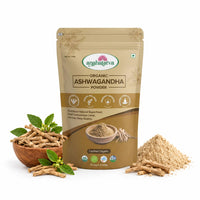
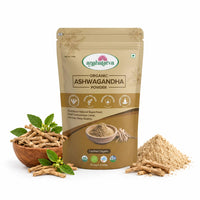
Mix half a teaspoon of Organic Ashwagandha Root Powder into a cup of warm milk. Add a little raw forest honey or jaggery powder and drink it in the evening. The powder is India Organic (NPOP) certified.
Ashwagandha capsules: a measured daily dose
If you don't like the earthy taste or want a fixed amount, try Ashwagandha Capsules 500 mg (5% withanolides). Take 1–2 capsules a day with milk or warm water.
A simple face pack (optional)
Some people mix a pinch of ashwagandha powder with rose water or honey and use it as a face pack for 10 minutes. This is a traditional home practice and hasn't been tested in clinical studies. Do a patch test on your inner arm first and stop if you notice any redness or itching.
Simple habits that support healthy skin
Ashwagandha works best as part of a balanced routine:
- Drink enough water during the day.
- Aim for 7–8 hours of sleep.
- Eat fresh fruit, vegetables and greens. A teaspoon of organic moringa powder is an easy way to add leafy greens.
- Protect your skin from strong sun.
- Make time each day to unwind: a walk, yoga or a few minutes of slow breathing.
Who should be careful
Ashwagandha is generally well tolerated by healthy adults. Speak to your doctor before using it if you are pregnant or breastfeeding, take regular medication (especially for thyroid, blood sugar, blood pressure or sleep), have an autoimmune condition, or are about to have surgery. For any ongoing skin problem, consult a dermatologist.
Frequently asked questions
Is ashwagandha good for your skin?
Early research on ashwagandha lotions applied to the skin shows better hydration and elasticity. Taken by mouth, ashwagandha supports the body's response to stress, and stress affects how your skin looks and feels.
Can I apply ashwagandha powder to my face?
Some people use it in homemade face packs, but this hasn't been tested in studies. Always do a patch test first.
Powder or capsules: which is better?
Both come from ashwagandha root. Powder is the traditional choice and costs less. Capsules give a fixed dose with no taste. Read more in Ashwagandha Powder vs Capsules: Which Should You Choose?
How long should I take ashwagandha?
Most clinical studies on stress ran for 8 to 12 weeks of daily use. Follow the label directions and speak to your doctor about longer use.
Note: This article is for general information only. It is not medical advice and is not intended to diagnose, treat, cure or prevent any disease.